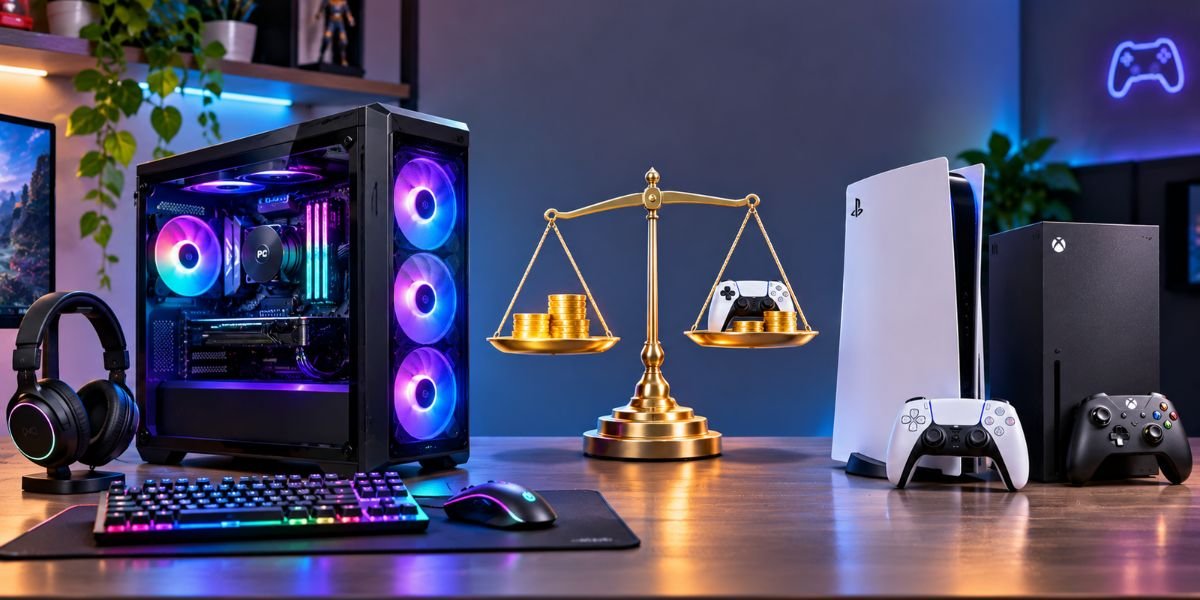
The old argument goes like this: a console costs less up front, but a gaming PC saves you money over time thanks to cheaper games and free online play. In 2026 that argument needs a fresh look. Console prices have climbed to record highs, and PC parts, especially memory, have become far more expensive too.
So is a gaming PC cheaper than a console in the long run? We ran the numbers over five years using current U.S. prices. Here is what each costs, where the savings really come from, and who comes out ahead.
What Consoles Cost in 2026
Consoles have become more expensive mid-generation, which is unusual. According to Tech Insider, as of November 2026 the Xbox Series X lists at $799.99 ($749.99 for the digital version), the PS5 Pro at $899.99 and the Nintendo Switch 2 at $499.99. Video Games Chronicle reported that U.S. shoppers paid an average of $672 for a PS5 in May 2026, up 33% from a year earlier.
On top of the hardware, online multiplayer usually requires a subscription. PlayStation Plus Essential costs $79.99 a year and Nintendo Switch Online starts at $19.99 a year. Xbox online play also requires a Game Pass tier. Our Game Pass vs PlayStation Plus comparison covers those plans in detail.
What a Gaming PC Costs in 2026
Building a PC has become pricier because of a sharp rise in memory and graphics card prices. Tom’s Hardware’s November 2026 build guide prices a capable 1080p-to-1440p gaming PC at about $1,268 before memory, with 16GB of DDR5 adding around $251. Its cheapest build, aimed at 1080p, comes in around $900 to $950 before memory.
You will also need a monitor, keyboard and mouse unless you already own them. On the plus side, online multiplayer on PC is free, and your PC can do everything else a computer does.
The 5-Year Cost Comparison
To compare fairly, we assumed the same habits for both: four new games a year at $69.99, five years of play, and online multiplayer throughout.
| 5-year cost | Console | Gaming PC |
| Hardware | $750 (Xbox Series X Digital) | $1,519 (build + 16GB RAM) |
| Extra controller / peripherals | $70 | $200 (monitor not included) |
| Online play (5 years) | $400 | $0 |
| Games, full price (20 games) | $1,400 | $1,400 |
| Total at full price | About $2,620 | About $3,120 |
| PC total if games bought 30% off | About $2,700 |
These are illustrative figures based on our assumptions, not quotes. Prices vary by model, retailer and region.
The PC starts about $900 behind. It wins back roughly $80 a year from free online play, and more if you buy games on sale. By our math, you would need to buy about five games a year at roughly 30% below their $70 launch price before the PC breaks even within five years.
Where a PC Saves You Money
- No subscription for online play. That alone is roughly $80 a year compared with PlayStation.
- Frequent game discounts. PC storefronts run regular seasonal sales, and older games often drop sharply in price.
- Upgrades instead of replacements. A newer graphics card can extend a PC’s life without buying a whole new machine.
- One device for everything. If the PC replaces a laptop or desktop you would otherwise buy, the real gaming cost drops a lot.
Where a Console Saves You Money
- Lower starting cost. Even after price rises, consoles cost less than a capable PC plus peripherals.
- Uses your TV. No monitor to buy.
- Resale value. Consoles and physical discs are easy to sell or trade in.
- Subscription libraries. Game Pass and the upper PlayStation Plus tiers can replace buying many games outright.
- No upgrade temptation. A console stays the same for its whole life, which keeps spending predictable.
Hidden Costs on Both Sides
A few costs are easy to forget when comparing sticker prices:
- Extra storage, since large modern games fill a console or PC drive quickly
- Additional controllers for local multiplayer
- A headset for voice chat
- Paid expansions and in-game purchases, which cost the same on every platform
None of these change the overall picture much, but they can add a few hundred dollars over five years either way.
Which Is Right for You?
- You play a few big releases a year: a console is cheaper and simpler.
- You buy lots of games and wait for sales: a PC can come out ahead.
- You need a computer for work or study anyway: a gaming PC is usually the better value overall.
- You play with friends on one platform: go where your friends are; the money difference matters less than playing together.
Whichever you choose, a simple monthly budget for games keeps costs under control. Our guide to budgeting methods can help.
Frequently Asked Questions
Is PC gaming cheaper than console gaming?
Not at first. A PC costs more up front, and only becomes cheaper over time if you buy many games on sale or would need a computer anyway.
How much does a good gaming PC cost in 2026?
Around $1,200 to $1,500 for solid 1080p to 1440p gaming, including memory, plus peripherals if you need them.
Do you have to pay for online play on PC?
No. Online multiplayer on PC is free in most games. Consoles generally require a paid subscription.
Why are consoles more expensive now?
Sony, Microsoft and Nintendo have all raised U.S. prices since 2025, citing rising costs, so consoles cost more today than at launch.
How long does a gaming PC last?
Often five years or more, especially if you upgrade the graphics card partway through.
Is a pre-built PC cheaper than building one?
With memory prices high, some pre-built PCs now cost about the same as buying parts separately, so compare both before deciding.
Should I wait for prices to drop?
Industry analysts have warned that console prices are unlikely to fall soon, and memory prices remain volatile. If you want to play now, watch for holiday sales rather than waiting indefinitely.