


Online shopping has made global products accessible, but it has also created a new challenge—finding quality products at the right price without falling for misleading listings. This is where Banggood stands out. Known for affordable tech gadgets, home essentials, and lifestyle products, Banggood has become a popular destination for value-driven shoppers worldwide.
This article explains what Banggood is, why it’s trusted by millions, how to shop safely, and how to get the best deals without risking your money.
Welcome to 2026, where the “shopping list” on your fridge has been replaced by an AI agent that knows you’re out of oat milk before you do. We live in an era of “Omniconsumers”—we research on our phones, test products in local “experience hubs,” and have them delivered to our doors by evening. But with all this high-tech convenience, how do you make sure you aren’t overpaying or buying into the hype? Smart shopping today isn’t just about finding a lower price; it’s about Shopping Intelligence. It’s the art of using the best tools to find quality that lasts, at a price that makes sense. Whether you’re upgrading your smart home or grabbing the latest gadget, this manual will help you navigate the modern market with ease.
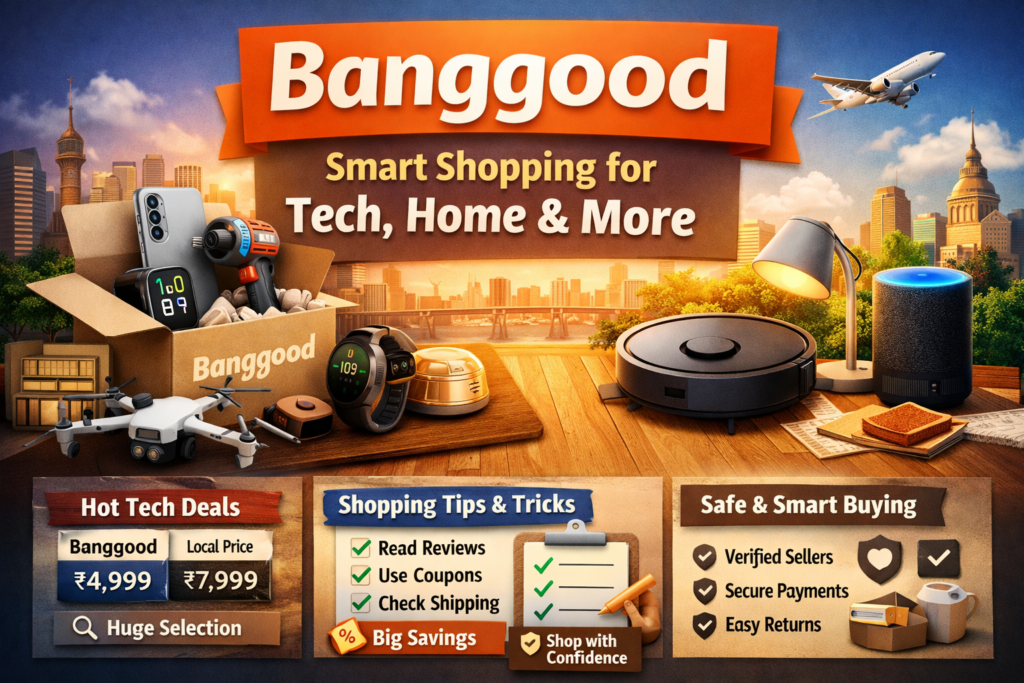
1. The Tech-Savvy Shopper: Beyond the Specs
In the past, we bought tech based on “Gigabytes” and “Megapixels.” In 2026, we buy based on ecosystem and longevity.
Before you buy a new piece of tech, ask yourself: “Does this play well with others?” With the rise of the Matter 2.0 protocol, your smart lights, fridge, and security cameras should all talk to each other regardless of the brand.
- The AI Assistant Hack: Use your voice assistant to “monitor” prices. You can say, “Hey, tell me when this laptop drops below $900,” and let the software do the stalking for you.
- Refurbished is the New Premium: Major tech brands now have “Official Refurbished” stores. These items are often “open-box” returns that have been tested and come with full warranties. It’s the smartest way to get flagship tech at a 30% discount.
2. Home & Living: The “Touch and Feel” Strategy
While we buy almost everything online, your home is a physical sanctuary. Smart shopping for the home in 2026 involves a “phygital” approach—combining physical testing with digital buying.
- Experiential Retail: Don’t just look at a couch online. Visit an experiential showroom where you can actually sit on it. Then, use your phone to scan the QR code to see if there’s a “first-time buyer” or “app-exclusive” discount.
- Subscription Savings: For things you use every day—like eco-friendly laundry pods or high-end coffee beans—set up a “Smart Subscription.” In 2026, most brands offer a 15–20% discount for recurring orders.
3. Mastering the 2026 “Sales Calendar”
The days of waiting for just “Black Friday” are over. In 2026, we have a year-round calendar of “Mega Sales.”
| Season | Major Event | What to Buy |
| January/February | Republic Day / New Year Sales | Fitness tech, large home appliances, and winter fashion. |
| May/June | Summer Tech / Big Saving Days | Air conditioners, refrigerators, and travel gadgets. |
| August | Freedom / Independence Sales | Smartphones, laptops, and home office gear. |
| October/November | Big Billion Days / Great Indian Festival | Everything! This is the absolute peak for electronics and gifts. |
4. Sustainability: The Ultimate Long-Term Save
True “Smart Shopping” involves looking at the life cycle of a product. In 2026, we use Digital Product Passports.
When you scan a product’s tag, you can see its “Repairability Score.” A $500 washing machine that you can easily repair yourself is a much better deal than a $400 one that you have to throw away the second a tiny sensor breaks.
Human Tip: Always check if a brand offers a “Circular” program. Many home and tech brands will now give you a trade-in credit for your old items, which you can use toward your next upgrade.
5. Outsmarting “Dynamic Pricing”
Retailers in 2026 use AI to change prices based on your behavior. If you look at a pair of headphones five times, the price might actually go up because the store knows you want them!
- The Incognito Move: Always do your final price check in a private browser window.
- The Abandoned Cart Strategy: Log in, put the item in your cart, and leave. Within 24 hours, the store’s AI will often send you a “Don’t forget this!” email with a 10% discount code to close the deal.
Conclusion: Trust Your Inner Compass
At the end of the day, no AI or discount code can tell you what makes your life better. Smart shopping is about using the technology of 2026 to save time and money, so you can spend more of both on the things that actually matter. Start small—set one price alert, check one repairability score, or try one trade-in. You’ll be surprised at how quickly “shopping” turns into “winning.”
Frequently Asked Questions (FAQ)
1. Is “Buy Now, Pay Later” (BNPL) a good idea for tech?
In 2026, BNPL has become very regulated and safe. It can be a great tool for a “Hero Piece” like a high-end laptop for work, provided you choose the 0% interest options. Just be careful not to stack too many small payments, or they can sneak up on you!
2. How do I know if an AI review is fake?
Look for the “Human Verified” badge or look for UGC (User-Generated Content). Real humans in 2026 post video reviews that show the product in a real, messy house—not a perfect studio. If a review sounds like a poem and has perfect studio lighting, it’s probably a bot.
3. What is the “Matter” protocol everyone talks about?
It’s basically a universal language for smart homes. If a device has the “Matter” logo, it means it will work with Apple Home, Google Home, and Amazon Alexa all at once. It’s the most important thing to look for when buying home tech to ensure your house stays “smart” for years.
4. Why is my friend seeing a different price for the same item?
This is called Personalized Pricing. Stores might show a lower price to a new customer to hook them, or a higher price to someone they know is a “loyalist.” To get the best deal, always clear your cookies or use a “Price Comparison Agent” that searches from a neutral perspective.
5. Are “Open-Box” deals safe?
Yes, and they are one of the best secrets of 2026! An open-box item is usually just something someone bought, realized was the wrong color, and returned the next day. You get the same warranty and a massive discount. Just make sure the retailer has a clear “inspection guarantee.