


Have you ever bought something because the ad looked amazing, only to have it break or disappoint you two weeks later? We’ve all been there. In 2026, the world of shopping is noisier than ever. With AI-generated reviews and flashy social media influencers, it’s hard to know what’s real. That’s where evidence-based shopping comes in. It sounds fancy, but it’s actually quite simple: it’s the art of using facts, data, and logic instead of just “vibes” to decide what to buy. By looking at the evidence before you tap “checkout,” you can stop wasting money on junk and start filling your life with things that actually work.
What is Evidence-Based Shopping?
Evidence-based shopping is like being a detective for your own wallet. Instead of falling for a “Limited Time Offer” or a pretty package, you look for proof. This proof can come from third-party certifications, long-term user data, or even scientific studies about materials.
In 2026, we have more information at our fingertips than ever before. Evidence-based shopping isn’t about being cynical; it’s about being informed. It’s the difference between buying a skin cream because a celebrity uses it and buying one because it contains ingredients proven by dermatologists to actually work.
1. The Power of Third-Party Certifications
In a world of “green-washing” (where companies pretend to be eco-friendly), certifications are your best friend. These are the “receipts” that prove a company is telling the truth.
When you see a label like Fair Trade, USDA Organic, or Energy Star, you aren’t just looking at a logo; you’re looking at a guarantee that an independent organization has inspected the product. For 2026, keep an eye out for “Digital Product Passports”—QR codes on labels that show you the entire history of an item, from the farm to the store shelf.
2. Decoding the Review Section
We’ve all heard of “fake reviews,” but did you know that in 2026, AI can write thousands of them in seconds? To shop with evidence, you have to look deeper.
- Look for the “Verified Purchase” tag: This ensures the person actually bought the item.
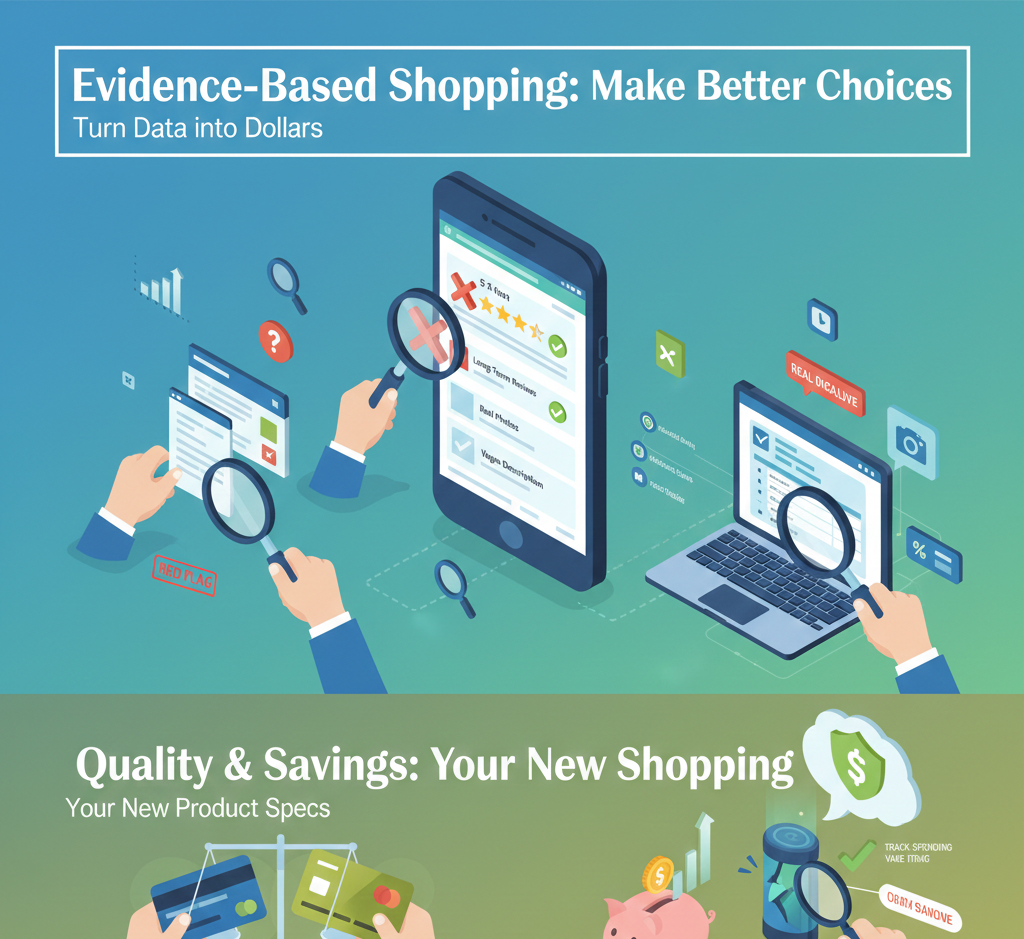
- Filter for the middle: One-star reviews are often just angry rants, and five-star reviews are often “honeymoon phase” excitement. The three and four-star reviews are where you find the real evidence about pros and cons.
- Watch Video Reviews: It’s much harder to fake a video of a product in action than it is to write a paragraph of text.
3. Materials Matter: The Science of Quality
One of the most “human” ways to shop smarter is to learn a little bit about what things are made of. Evidence shows that natural materials like merino wool, solid wood, and tempered glass almost always outlast their synthetic counterparts.
Before you buy a piece of furniture, ask: “Is this solid wood or particle board?” Before you buy a jacket, check the tag for the percentage of natural fibers. Shopping by material is the ultimate evidence-based hack because physics doesn’t lie—well-made materials simply last longer.
4. Use Price Tracking as Proof
A “sale” is only a sale if the price was actually higher before. Retailers often use “dynamic pricing” to raise and lower prices throughout the day. Using a price-tracker tool is a form of evidence gathering. It shows you the price history of an item. If the tracker shows that a pair of headphones is at its lowest price in six months, you have the evidence you need to know it’s a good deal. If the price was actually lower last week, the “sale” is just a marketing trick.
5. The “Wait and See” Strategy
The strongest evidence for whether you truly need something is time. We’ve all had that “must-have” feeling that disappears after a good night’s sleep.
Try the 72-Hour Rule: Put the item in your cart, but don’t buy it for three days. If you still want it after the dopamine rush has worn off, you have evidence that it’s a thoughtful purchase, not just an impulse.
Summary: Evidence-Based Shopping Checklist
| Evidence Type | What to Look For | Why it Works |
| Certifications | B-Corp, GOTS, Energy Star | Independent proof of quality. |
| Reviews | 3-4 star ratings, video reviews | Highlights real-world usage. |
| Materials | Natural fibers, solid construction | Predicts how long it will last. |
| Data | Price history graphs | Identifies “fake” sales. |
Conclusion: Your Wallet Will Thank You
Evidence-based shopping isn’t about taking the fun out of life. In fact, it’s the opposite. When you know that the things you buy are high-quality, ethically made, and fairly priced, you feel better about using them. You stop feeling the “buyer’s remorse” that comes from wasted money and start feeling the “buyer’s peace” that comes from a smart choice.
The next time you’re about to click “buy,” take 60 seconds to look for the evidence. Your future self—and your bank account—will be glad you did.
Frequently Asked Questions (FAQ)
1. Is evidence-based shopping more expensive?
Actually, it usually saves you money. While you might spend a little more upfront for a “certified” or high-quality item, you won’t have to replace it as often. It’s the “buy it once, buy it right” philosophy. Over five years, evidence-based shopping is almost always cheaper than buying “bargain” items that break.
2. How can I trust “influencer” reviews in 2026?
Always look for the #ad or #sponsored tag. If someone is being paid to show you a product, their “evidence” might be biased. True evidence comes from people who bought the product with their own money and have used it for at least a month.
3. What is a “Digital Product Passport”?
This is a new technology in 2026! It’s usually a QR code on a product’s tag or packaging. When you scan it, you can see evidence of where the product was made, the materials used, and even how to recycle it at the end of its life. It’s the ultimate tool for transparency.
4. Can I use AI to help me with evidence-based shopping?
Yes! You can ask an AI agent to “summarize the pros and cons from 500 verified reviews” or “find the lowest price for this item over the last six months.” AI is a great tool for gathering data, as long as you make the final decision.
5. What is the most important “piece of evidence” for any purchase?
The most important evidence is your own lifestyle. A product can have 10,000 five-star reviews, but if it doesn’t fit into your actual daily routine, it’s not a good choice for you. Always ask: “How will I realistically use this in my life next Tuesday?”