


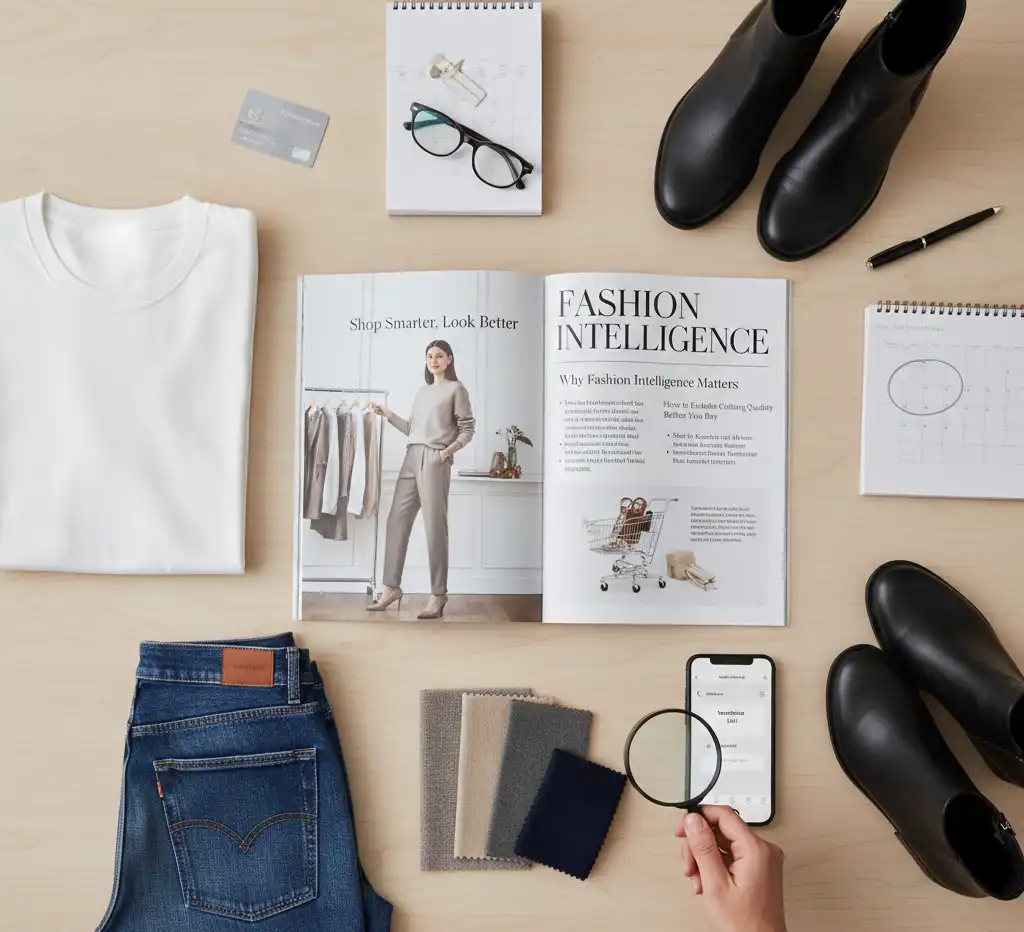
When you look in your closet, do you see a collection of stories or a pile of “I have nothing to wear”? In 2026, the way we dress has changed. We are moving away from the “fast fashion” rush and toward something much cooler: Fashion Intelligence. This isn’t about being a genius; it’s about being thoughtful. It’s the art of using a little bit of tech and a lot of common sense to build a wardrobe that makes you feel like the best version of yourself. Whether you’re navigating AI stylists or just trying to find a pair of jeans that actually fit, this guide is your new best friend in the world of style.

What is Fashion Intelligence?
At its heart, Fashion Intelligence is about informed choices. It’s the bridge between what is “on trend” and what is “on you.” For years, we followed magazines and influencers blindly. Today, we have “intelligent” tools—from apps that catalog your closet to AI that predicts which colors will boost your mood.
But the “intelligence” isn’t just in the software; it’s in the strategy. It’s knowing that a $100 sweater you wear 100 times is “cheaper” than a $10 shirt you wear once. It’s about shopping with your brain as much as your eyes.
1. The Power of the “Digital Wardrobe”
One of the smartest things you can do in 2026 is digitize your closet. Apps like Whering or Acloset allow you to snap photos of your clothes and see them all on one screen.
Why does this help you shop smarter?
- No more “Double Buys”: You’ll never accidentally buy a third white T-shirt because you forgot you already had two.
- Virtual Styling: You can “try on” new combinations while lying in bed. It encourages you to wear what you already own in new, creative ways.
- The “Gap” Analysis: When you see everything together, it becomes obvious what is missing. Maybe you have ten tops but only one pair of pants that fits well. That’s your signal to stop buying shirts!
2. Shop for “Cost-Per-Wear,” Not Price Tags
Fashion intelligence requires a shift in how we think about money. A “bargain” isn’t a bargain if it sits in the back of your drawer with the tags still on.
The formula is simple:
$$\text{Cost-Per-Wear} = \frac{\text{Price of the Item}}{\text{Number of Times You Wear It}}$$
A pair of high-quality leather boots might cost $200. But if you wear them 200 days a year for three years, they cost you roughly 33 cents per wear. Compare that to a $30 “trendy” dress you wear once to a wedding and then never again. The boots are the smarter, “cheaper” investment.
3. Embracing the “Capsule” Mindset
You don’t need a walk-in closet to look like a style icon. In fact, some of the most fashionable people in the world have the fewest clothes. This is the Capsule Wardrobe—a collection of versatile, high-quality pieces that all work together.
When every top in your closet matches every bottom, getting dressed in the morning takes 30 seconds. Look for “Hero Pieces”:
- A perfectly tailored blazer.
- A crisp, white button-down in a natural fabric like organic cotton.
- Neutral-colored trousers or high-quality denim.
- A signature coat that makes any outfit look expensive.
4. Let Technology Do the Heavy Lifting
In 2026, AI is your personal shopping assistant. Tools like Style3D and Virtual Try-On mirrors are becoming standard.
- Precision Fit: Many brands now use AI to scan your measurements so you can order the “perfect fit” size, reducing the hassle of returns.
- Predictive Trends: “Fashion Intelligence” tools can tell you which styles are “micro-trends” (gone in a month) and which are “macro-trends” (here to stay). Smart shoppers invest in the latter.
5. Sustainability is the Ultimate Style Statement
The most “intelligent” fashion choice you can make is a sustainable one. In 2026, we’ve moved past the “green-washing” phase. We are looking for Digital Product Passports—QR codes on labels that tell you exactly where the fabric came from and who made it.
Choosing natural fibers like wool, silk, and linen isn’t just good for the planet; these materials breathe better, last longer, and look more “premium” than synthetics like polyester. Being smart means knowing that “ethical” and “fashionable” are now the same thing.
How to Build Your Intelligent Wardrobe: A Quick Checklist
| Step | Action | Benefit |
| Audit | Remove anything you haven’t worn in a year. | Clears mental and physical space. |
| Analyze | Identify your “uniform” (what you feel best in). | Simplifies future shopping trips. |
| Research | Check fabric labels before you hit “buy.” | Ensures longevity and comfort. |
| Invest | Buy the best quality you can afford for basics. | Lowers your long-term “Cost-Per-Wear.” |
Conclusion: Your Style, Your Intelligence
Looking better isn’t about having the most expensive clothes; it’s about having the right clothes. Fashion Intelligence is the quiet confidence that comes from knowing your wardrobe works for you, not the other way around. By using the digital tools at your fingertips, focusing on quality over quantity, and staying true to your personal “uniform,” you turn the chore of getting dressed into a daily act of joy.
The most fashionable thing you can wear is an outfit that was chosen with purpose. Happy shopping!
Frequently Asked Questions (FAQ)
1. Is “Fashion Intelligence” just for people who love technology?
Not at all! While there are great apps and AI tools to help, Fashion Intelligence is mostly a mindset. It’s about asking “Will I wear this 30 times?” before you buy it and learning which fabrics feel best on your skin. The tech is just there to make those smart choices easier.
2. How do I find my “personal style” if I’m not sure what I like?
Start by looking at your “Digital Wardrobe” or even just the clothes you reach for most often. Do you prefer neutrals or bright colors? Loose fits or tailored shapes? Your favorite clothes are already telling you your style—you just have to listen to them.
3. Does shopping “smarter” mean I can never buy something just because it’s fun?
Of course not! A smart wardrobe can (and should) have “Joy Pieces.” The rule of thumb is the 80/20 rule: 80% of your closet should be versatile basics, and 20% can be fun, trendy, or “loud” pieces that make you smile.
4. Why is “natural fabric” so important in 2026?
As our climates shift, “performance” matters. Natural fibers like linen and cotton keep you cool, while wool regulates temperature. Plus, they don’t shed microplastics into the water when you wash them. They are better for your skin and the Earth.
5. I have a small budget. Can I still be “Fashion Intelligent”?
Yes! In fact, a small budget requires more intelligence. It means shopping secondhand (resale is huge in 2026!), visiting clothing swaps, and investing in one great item instead of five poor ones. Intelligence is about value, not the amount of money in your wallet.