

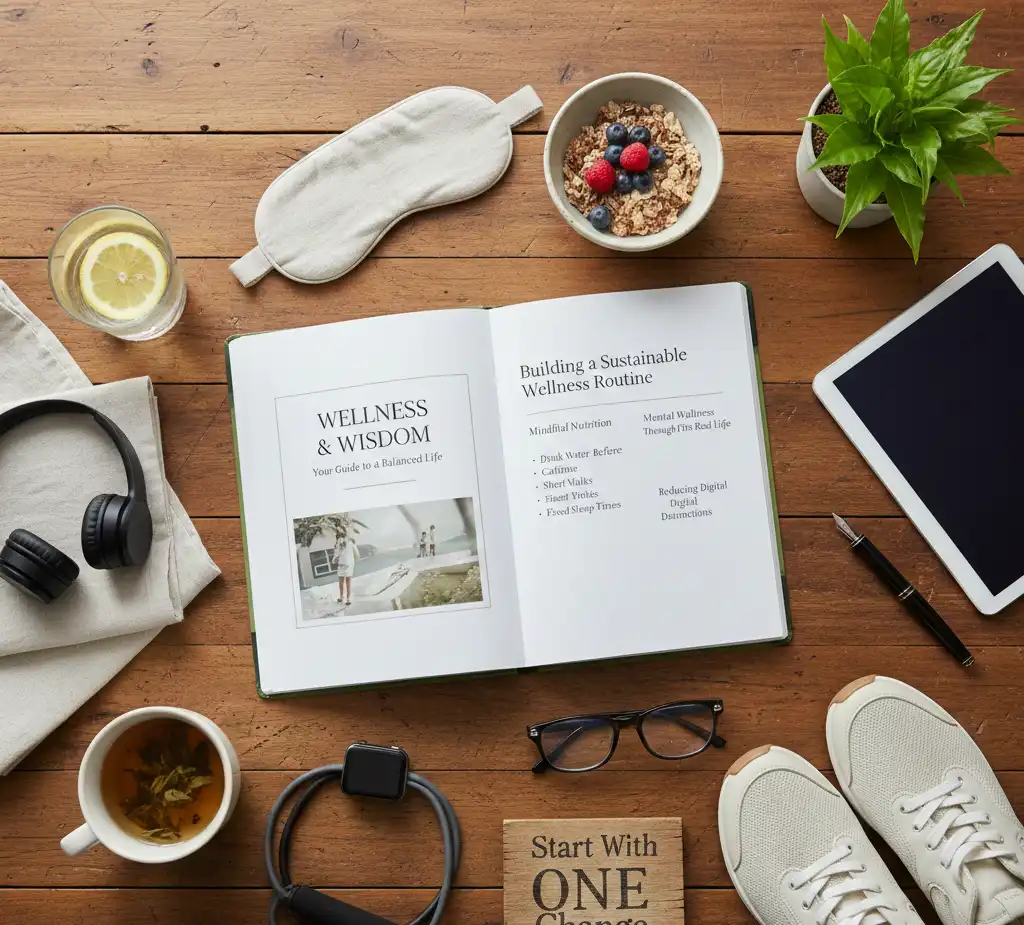
For a long time, we treated wellness like a math problem to be solved. We tracked every calorie, obsessed over sleep scores, and treated our bodies like machines that needed “hacking.” But as we move through 2026, the vibe is shifting. We are realizing that true health isn’t just about data; it’s about how we feel in our skin and how we connect with the world. “Wellness Meets Wisdom” is the idea that we can use modern science while listening to the ancient rhythms of our bodies. It’s about moving from “over-optimization” to “intentional living.” Welcome to your new lifestyle companion.
The Great “Human” Reset of 2026
If 2024 was the year of the wearable and 2025 was the year of AI health coaches, 2026 is the year of the Human Reset. We are seeing a massive “over-optimization backlash.” People are tired of feeling stressed by their fitness trackers. Instead, the focus has moved toward neurowellness—the simple practice of making your nervous system feel safe.
In this new era, wellness isn’t a chore you add to your to-do list. It’s a companion that walks beside you. It’s about finding joy in a communal sauna, feeling the morning sun on your face, and choosing a slow walk in the park over a stressful HIIT session when your body is tired.
Gemini said
Wellness Meets Wisdom: Your Lifestyle Companion in 2026
For a long time, we treated wellness like a math problem to be solved. We tracked every calorie, obsessed over sleep scores, and treated our bodies like machines that needed “hacking.” But as we move through 2026, the vibe is shifting. We are realizing that true health isn’t just about data; it’s about how we feel in our skin and how we connect with the world. “Wellness Meets Wisdom” is the idea that we can use modern science while listening to the ancient rhythms of our bodies. It’s about moving from “over-optimization” to “intentional living.” Welcome to your new lifestyle companion.
The Great “Human” Reset of 2026
If 2024 was the year of the wearable and 2025 was the year of AI health coaches, 2026 is the year of the Human Reset. We are seeing a massive “over-optimization backlash.” People are tired of feeling stressed by their fitness trackers. Instead, the focus has moved toward neurowellness—the simple practice of making your nervous system feel safe.
In this new era, wellness isn’t a chore you add to your to-do list. It’s a companion that walks beside you. It’s about finding joy in a communal sauna, feeling the morning sun on your face, and choosing a slow walk in the park over a stressful HIIT session when your body is tired.
[img]
1. Ancient Wisdom Meets Modern Precision
One of the most exciting parts of modern living is how we are bringing back ancient traditions like Ayurveda and Traditional Chinese Medicine (TCM), but with a 2026 twist.
We are using biometrics (like heart rate variability) to see exactly how ancient practices affect us. For example, we now know that the “warm water in the morning” habit from Ayurveda actually helps jumpstart digestion and calm the nervous system. We aren’t just doing these things because “they’ve always been done”; we’re doing them because we can see they work.
- Circadian Anchoring: Using morning light rituals to set our internal clocks.
- Adaptogenic Support: Using herbs like Ashwagandha not just as a “supplement,” but as a way to support the body’s natural stress response.
- Contrast Therapy: Combining the ancient heat of a sauna with the modern precision of a cold plunge for recovery.
2. The Rise of “Soft Care”
For years, the wellness world was all about “hard care”—pushing harder, fasting longer, and doing more. Now, we are embracing Soft Care. Soft care is about nervous-system medicine. It includes things like:
- Micro-breaks: Taking 60 seconds to breathe deeply between meetings.
- Somatic Movement: Gentle stretching or “scream circles” to release pent-up emotional energy.
- Sensory Experiences: Using scent, sound baths, and touch to ground ourselves in the present moment.
Living with wisdom means knowing when to push and when to pause. In 2026, the “pause” is considered just as productive as the “push.”
3. Your Home as a Social Sanctuary
Wellness used to be a lonely pursuit—just you and your yoga mat. Today, it’s becoming social. We are seeing a rise in “Social Sanctuaries.” These are places like neighborhood bathhouses, communal saunas, and garden clubs where wellness happens in a community.
Even at home, the “Lifestyle Companion” approach means creating spaces that invite connection. Instead of a “home gym” tucked away in a dark basement, people are creating “wellness corners” in their living rooms—places with plants, natural light, and comfortable seating for meaningful conversations.
4. Sustainability: The Ultimate Wisdom
True wisdom involves looking at the big picture. You can’t be truly well if the world around you is suffering. The modern lifestyle is moving toward “Regenerative Wellness.” This means choosing products that are as good for the Earth as they are for you.
- Quality over Quantity: Buying one high-quality, organic cotton yoga mat that lasts a decade instead of five cheap plastic ones.
- Seasonal Eating: Aligning your diet with what is growing locally. It’s better for your gut health and the planet.
- Digital Minimalism: Wisdom tells us that we don’t need to be “on” 24/7. Setting boundaries with technology is the ultimate sustainable habit.
5. Longevity: The New Status Symbol
In 2026, “looking young” has been replaced by “living young.” Longevity is the new focus. This doesn’t mean trying to live forever; it means staying strong, sharp, and mobile for as long as possible.
- Zone 2 Training: Steady, easy movement (like a brisk walk) that builds heart health without burning you out.
- Muscle as Medicine: Recognizing that strength training is essential for metabolic health and bone density.
- Cognitive Play: Keeping the brain sharp through learning new skills and social engagement.
Conclusion: Trusting Your Inner Compass
At the end of the day, the best “lifestyle companion” isn’t an app or a book—it’s you. All the wisdom in the world is useless if you don’t listen to your own body.
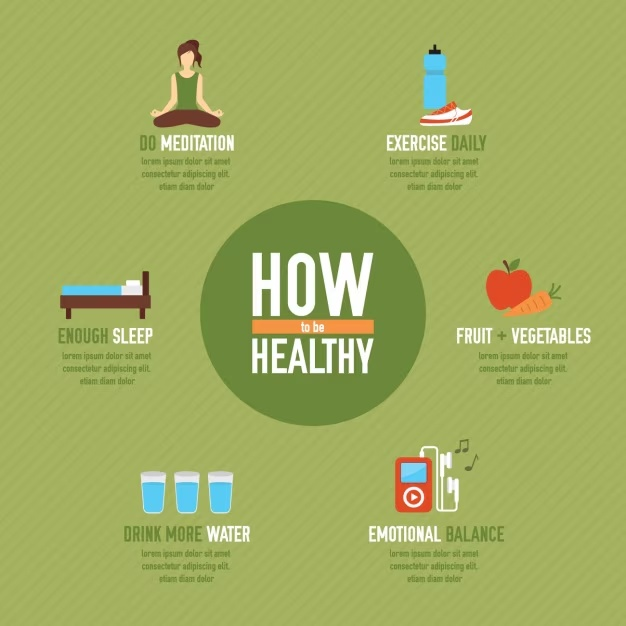
The goal of “Wellness Meets Wisdom” is to give you the tools to build a life that feels authentic. Start with one small change. Maybe it’s a 10-minute walk without your phone, or perhaps it’s swapping your third coffee for a cup of warm herbal tea. These tiny ripples of intention are what eventually create a sea of change.
Frequently Asked Questions (FAQ)
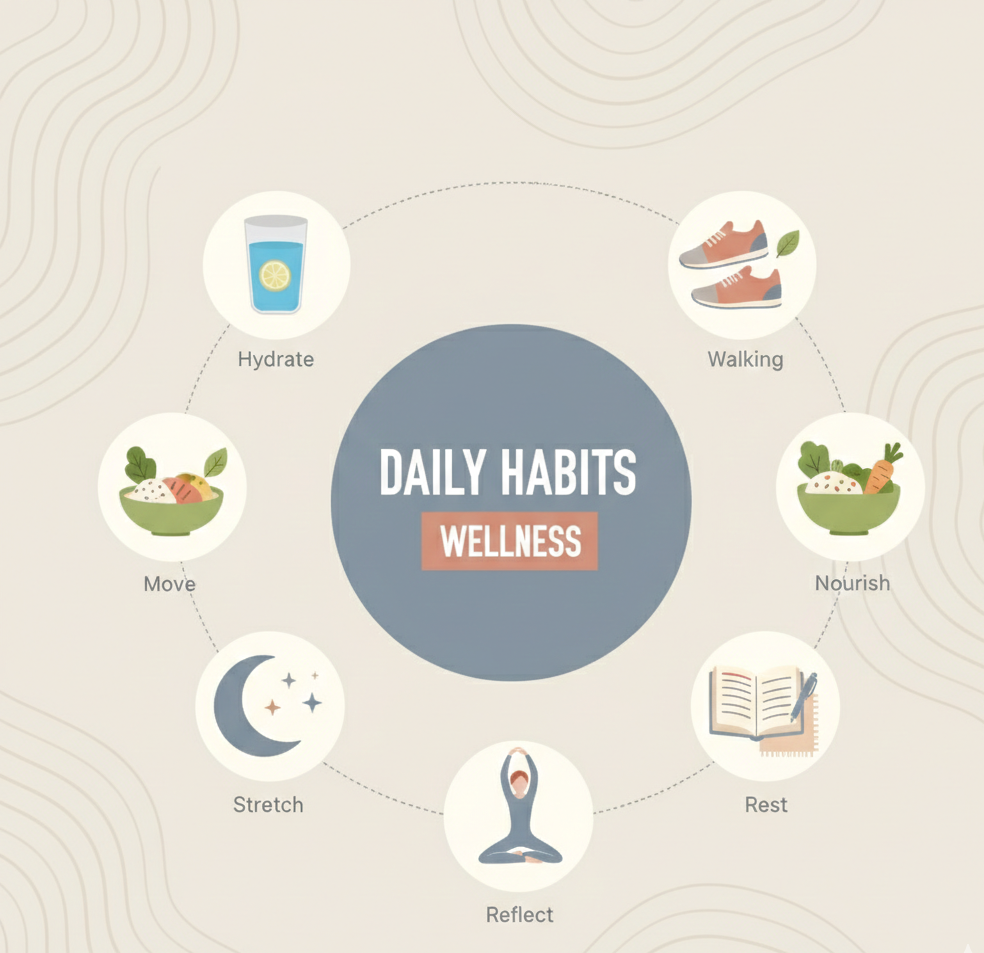
1. How do I start a “wellness” routine if I’m already overwhelmed? The “Wisdom” approach says: start smaller than you think. Don’t try to change your whole life on Monday. Pick one “anchor habit”—like drinking a glass of water when you wake up—and do only that for a week. Success builds confidence.
2. Is neurowellness just another word for meditation? Meditation is a part of it, but neurowellness is broader. It’s any activity that helps regulate your nervous system. For some, that’s deep breathing; for others, it’s gardening, playing with a pet, or even listening to a specific type of music. It’s about finding what makes your brain feel calm.
3. Do I need expensive gadgets to follow these 2026 trends? Not at all. In fact, the “Over-Optimization Backlash” is all about getting back to basics. The most powerful wellness tools—sunlight, breath, walking, and community—are free. Use technology as a helpful assistant, not a master.
4. What is the difference between “Hard Care” and “Soft Care”? “Hard Care” focuses on performance and physical results (like “no pain, no gain”). “Soft Care” focuses on regulation and recovery (like “listen to your body”). A wise lifestyle uses both in balance.
5. How does sustainability fit into my personal wellness? When you choose natural, non-toxic, and long-lasting products, you reduce the “toxic load” on your body and your mind. Living in a way that respects the environment creates a sense of peace and purpose, which is a major pillar of mental well-being.